On September 23, 1999, three bisexual activists — Wendy Curry, Michael Page, and Gigi Raven Wilbur — celebrated the first Bisexual Visibility Day. While it may not be quite as famous as Pride Month (June, commemorating the Stonewall Riots), National Coming Out Day (October 11) or even International Talk Like a Pirate Day (September 19, which of course began strictly as a joke), Bisexual Visibility Day has remained a day that is meaningful to the bi community and is probably more important to the overall queer community than many realize.
In honor of Bisexual Visibility Day, here’s my take on the history of bisexuality over the last fifty years. I’ll conclude with a few thoughts about why I think a day like today matters: because visibility matters, and not just for bi folks.
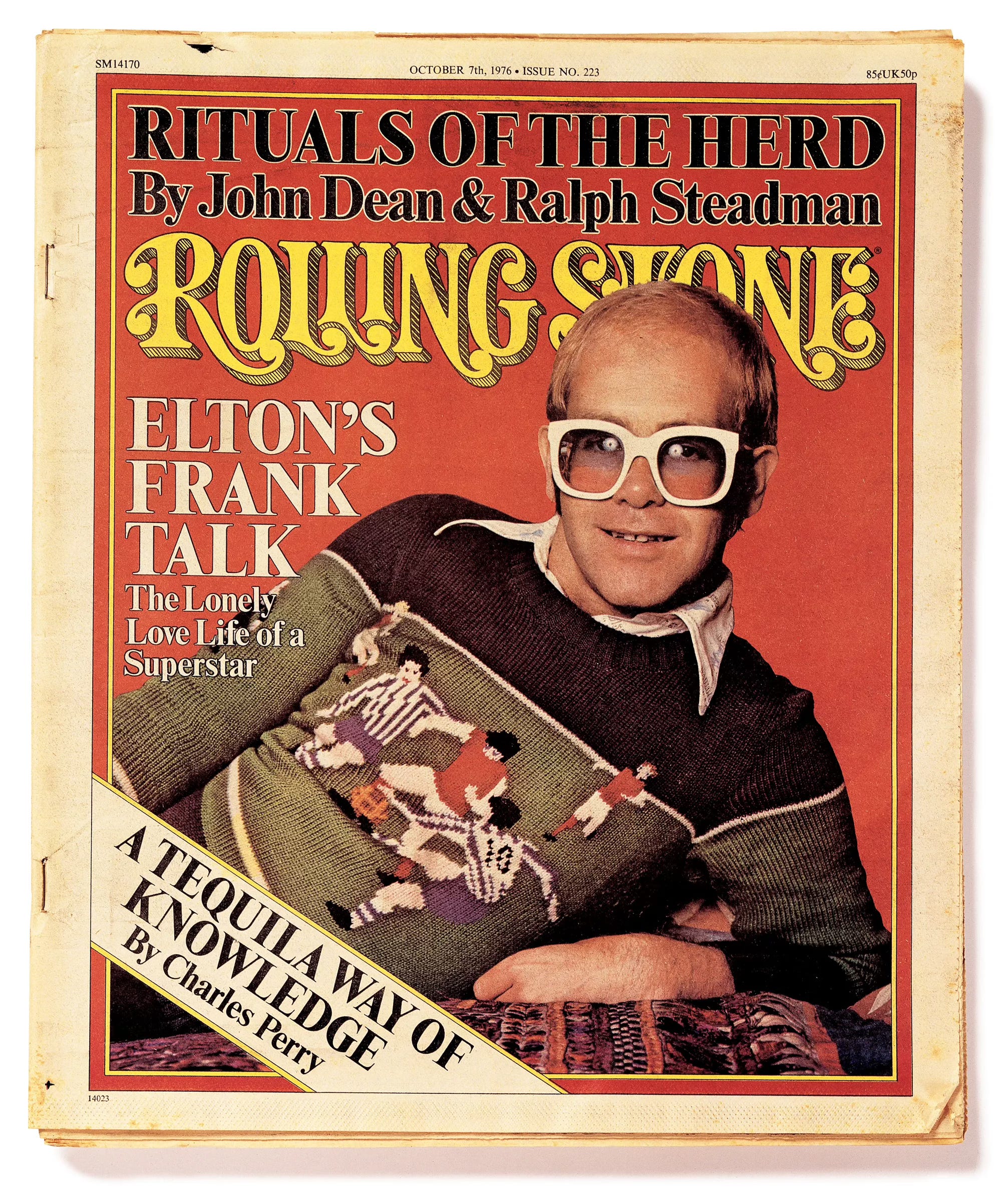
Our story begins in October 1976 — almost exactly half a century ago — when Elton John came out as bisexual.1 It was in an interview in Rolling Stone magazine, so it made quite the splash. For those who weren’t teenagers at the time: Elton John was basically as big in the mid-1970s as Taylor Swift is today. So for him to come out as bi, at a time when more than 30 states still had anti-sodomy laws on the books, was nothing short of huge.
He wasn’t the only one. David Bowie, Dusty Springfield, Joan Baez, and Lou Reed were all forthcoming to a greater or lesser extent in the ‘70s about either being in non-straight relationships or identifying as bisexual. Of course, many other musicians and actors kept their sexuality strictly in the closet. Freddie Mercury, Barry Manilow, Liberace, Rock Hudson, and Jim Nabors were just a few of the celebrities of that era who worked to keep their sexuality private (Liberace went so far as to sue people who called him gay — ah, the irony).
And while Mercury and Liberace were iconic for their flamboyance, they nevertheless would deflect or deny any speculations about their sexuality. When Barry Manilow finally came out at the age of 73, he said he never wanted to discuss his sexuality because he was afraid of disappointing his largely female fanbase. That may sound silly to us today, but it also strikes me as deeply sad.
Elton John went on, in 1992, to clarify that he really wasn’t bisexual — he was just plain gay. But for more than 15 years, he was “on the record” as bi.
Bisexuality as Myth and Menace
That fact — that Elton was not “really” bisexual — points to one of the enduring myths about bisexuality: that it doesn’t really exist. This myth maintains there are only two kinds of people, straights and gays/lesbians. Therefore, if someone says they’re bi, they are really either a straight person who’s just going through a phase, or they’re actually gay or lesbian but just not willing to fully admit it (like Elton John in 1976). But that kind of binary thinking rests on the idea that sexuality is monolithic and never changes. Even back in the 1950s, sex researcher Alfred Kinsey developed a scale for understanding sexual orientation as a spectrum: some people are entirely straight, some entirely gay/lesbian, but then others are located at various points along the spectrum, maybe feeling more attracted to one sex than the other, but still honestly capable of attraction across the spectrum.
If in the 1970s bisexuality was seen as a myth, by the 1980s it had a new reputation: it was dangerous. This was especially aimed at bisexual men, for they were seen as the “bridge” by which the HIV virus got transmitted into the heterosexual population. Public perception of the AIDS pandemic, at least in America, was always clouded by homophobia, since during the height of the pandemic more than half of those who died from HIV infections were men who had sex with men. During the moral panic of the Reagan years, AIDS was dismissed as “the gay disease” and bisexual men were seen as villains for getting infected by their male lovers and then passing the virus on to their “innocent” female partners. The anti-bi backlash got so strong that David Bowie scurried back into the closet, announcing in 1983 that coming out as bisexual was the biggest mistake he ever made.2
Medical advances by the mid 1990s turned the tide on HIV infection as an automatic death sentence, but “bisexual chic” took time to recover. Nevertheless, celebrities as diverse as Ani DiFranco, Miley Cyrus, Janelle Monáe, Lady Gaga, Frank Ocean, and even Kurt Cobain self-identified as bisexual or bi-curious over the years.
By the turn of the century and beyond, yet another new phenomenon emerged: the tendency among younger generations to identify as queer rather than gay, bi, or lesbian.
Us boomers came of age in a time when “queer” was used pretty much only as a slur, a derogatory term used to describe non-straight people by people who were not allies. But thanks to activists who embraced the word in an effort to reclaim it, and then television shows like Queer as Folk or Queer Eye for the Straight Guy, by the early years of the new century the connotation of the word queer had changed dramatically. But it also changed the dynamics within the queer (or LGBTQ) community: those who prefer to self-identify as queer seem to be far more comfortable with the idea of sexual fluidity, where the lines that separate gay and bi or lesbian and bi become blurry if not disappearing entirely. Meanwhile, new ways for talking about sexual orientation emerged, including pansexual (sexual attraction not only to men and women, but also to nonbinary or third-gender persons) and asexual (individuals who experience little or no sexual attraction to anyone). Queer identity seems to celebrate sexual (and gender) diversity without needing to fixate on labels that seem to imply categories that never change.
Whew! A lot happened in the bisexual world over the last fifty years.
Why Visibility Matters
But back to today: why is there a need for a Bisexual Visibility Day?
Because bisexuality is often subject to what has been called erasure. Bisexual erasure means something deeper than David Bowie backtracking his public queerness. It refers to the fact that when a bisexual person enters into a monogamous relationship and chooses to be faithful to their one partner, their bisexuality essentially goes into storage. By itself this is not a bad thing: marriage, when happy, is a beautiful experience, and giving up other sex partners is for most people a reasonable price to pay for the stability and emotional depth that a healthy marriage provides. But it also means that, on a social level, bisexuality becomes the lost sexual orientation. Once a couple gets married, the world begins to see them as either a straight couple or a gay or lesbian couple, depending on how they present themselves to the world. And as this happens on a large scale, the extent of just how many people are bisexual becomes, well, erased.
I have been married for over 33 years. I’m happy in my marriage and my spouse says the same (and I have no reason to doubt her). We are by choice and intention monogamous. Anyone who meets us, even if they are aware that I am nonbinary, will still think of us as a “straight” couple, given our respective male and female bodies. But that’s a perception built on erasure — for I have known since I was a teenager that I am attracted to men as well as women, which did not vanish when I got married. This simply got integrated into my commitment to be faithful to one person.
The old myths die hard. There’s a horrible moment in Sex and the City when Carrie Bradshaw is freaking out because she’s just met a guy who casually came out to her as bi. “I’m not even sure bisexuality exists,” she declares. “I think it’s just a layover on the way to ‘Gaytown.’” Ouch — and that aired in 2000.3
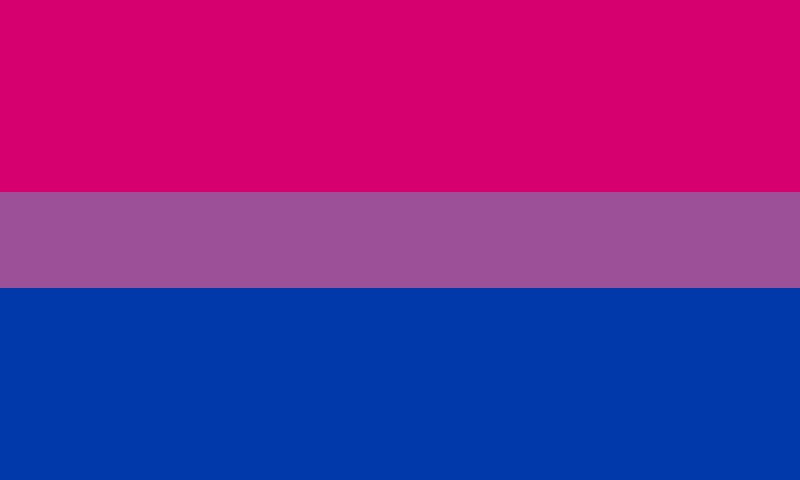
Why should we care about bisexual visibility? Why not just accept that anyone who opts for monogamy will end up categorized as either straight or gay/lesbian? I think the answer operates on two levels, one personal and the other social.
On the personal level, I think bisexual visibility matters because it is a matter of authenticity. It’s one thing to put one’s bisexuality in the basement, but it’s a short hop from there to pretending to be what we aren’t. This is perhaps especially true for anyone who is a member of a conservative religious group, where queerness (of any stripe) is rejected and condemned. “Passing” as a straight person when one is really bisexual might seem convenient in such settings, but it is like a slow leak of one’s self-esteem. Sooner or later, it can only take a toll. So being honest about who we are, even when we have chosen not to act on our attraction, is a matter of psychological health (this is why some Catholic priests insist on being out of the closet as gay men, even though they are celibate; they are not intending to act on their queerness, but they know that authenticity means they can’t hide who God has created them to be).
But an even more important reason is the social implication of bisexual visibility. It is mind-blowing, but unfortunately true, that in 2026 queer people continue to be stigmatized by a large segment of our society. Even worse, our current federal government and far too many state legislatures appear to be overtly hostile to the specific needs and concerns of the LGBTQ community. Being out and proud as a bisexual person is an act of solidarity. It’s a reminder that bisexual people do exist, which means in a larger sense that queer people exist. To a young person who is at the beginning of their coming out journey, knowing that bi people exist can be a lifesaver. Politicians and influencers need to be reminded that bi people are not a myth, and not villains, but an important segment of the LGBTQ community — and of society at large. It has been said that the personal is political — so the personal visibility of bisexual people, even when they have opted to be in monogamous relationships, helps the political work of those who want our world to be a safe place for all people regardless of their sexuality.
So, whether you are bi or not: happy Bisexual Visibility Day!